Fussy Eating: Staying Calm at the Table
Mealtime stand-offs help no one. Learn how to lower the pressure, protect your relationship, and gently broaden what your child eats.
Published 20 April 2026 · Updated 27 September 2026
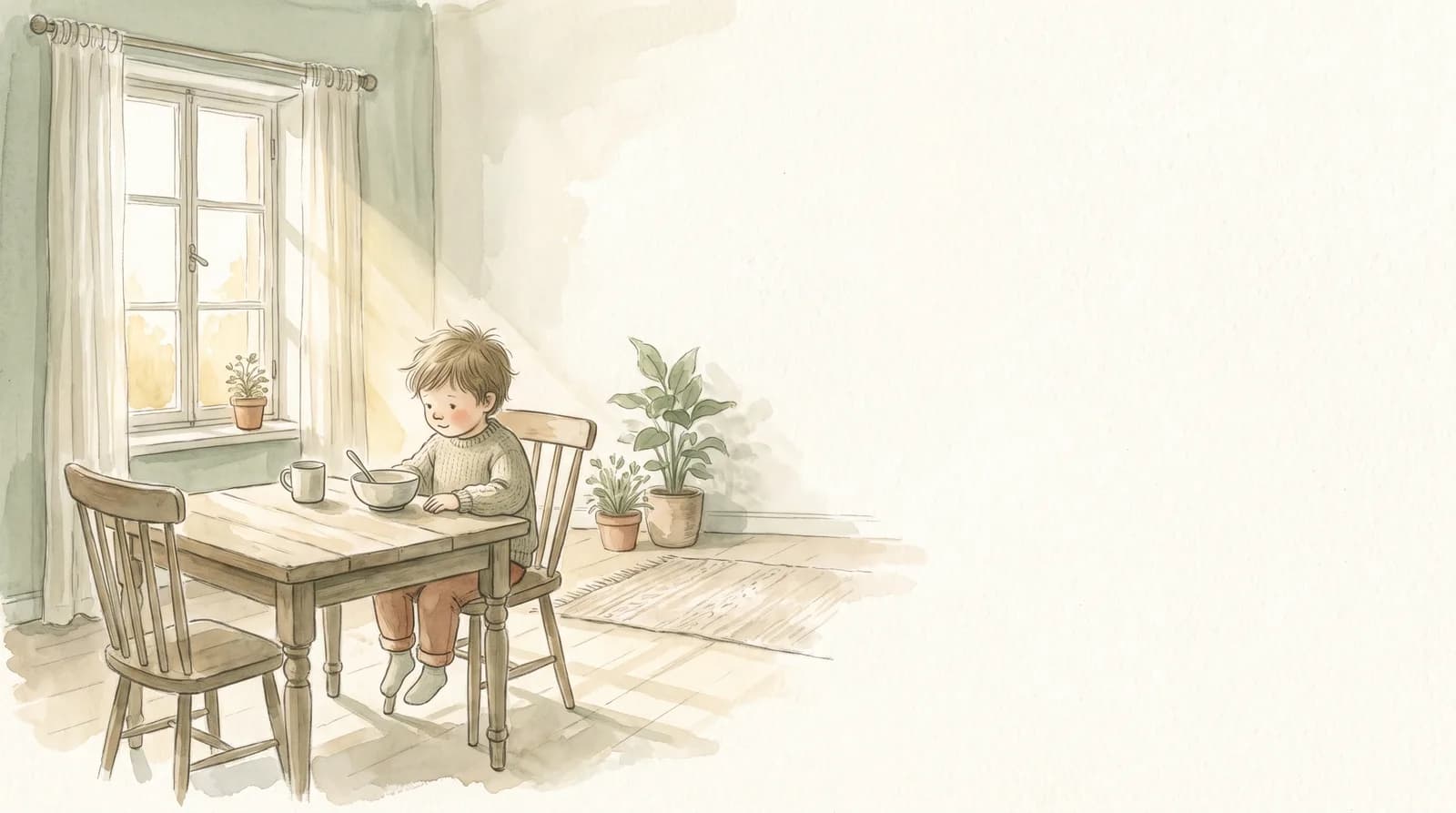
Few things worry parents like a child who "won't eat anything." Mealtimes can become a daily stand-off, with pleading, bribing, and tears on both sides. Yet the more pressure we put on eating, the more children tend to dig in. The way through is, surprisingly, to relax the table.
Why children get fussy
Cautiousness around new foods is a normal and even protective part of early childhood. Appetite also varies hugely day to day as children grow in bursts. What looks like fussiness is often a child following their own hunger and a natural wariness of the unfamiliar.
Share the responsibility
A helpful, widely used approach divides the job in two: you decide what is offered, and when; your child decides whether and how much they eat. You're not a short-order cook, and you're not the food police. This takes the pressure — and the power struggle — off the table.
Lower the temperature
- Serve new foods alongside safe favourites, with no pressure to try them.
- Avoid bribes and rewards ("three more bites for pudding"). They make the food feel like work.
- Let them explore. Touching, smelling, and playing with food are real steps toward eating it.
- Keep mealtimes pleasant. Chat, connect, and model eating a variety yourself.
Play the long game
It can take many calm, no-pressure exposures before a child accepts a new food. Keep offering without comment. A food rejected ten times isn't a failure — it's part of a normal process that simply takes patience.
When to seek advice
Most fussy eating eases with time and a low-pressure approach. But if your child is losing weight, eating an extremely narrow range, gagging, or you're genuinely worried about their nutrition, speak with your GP, health visitor, or a paediatric dietitian. Trust your instincts — asking for support is never an overreaction.
Bring ParentUp home
Get gentle daily steps, your child's profile, and Coach Ella in your pocket — free to start.