'I'm Not Tired!': Bedtime Resistance at Every Age
The battle changes costume as children grow — the toddler curtain calls become a ten-year-old's lights-out negotiations. What helps at each stage.
Published 24 August 2026 · Updated 27 September 2026
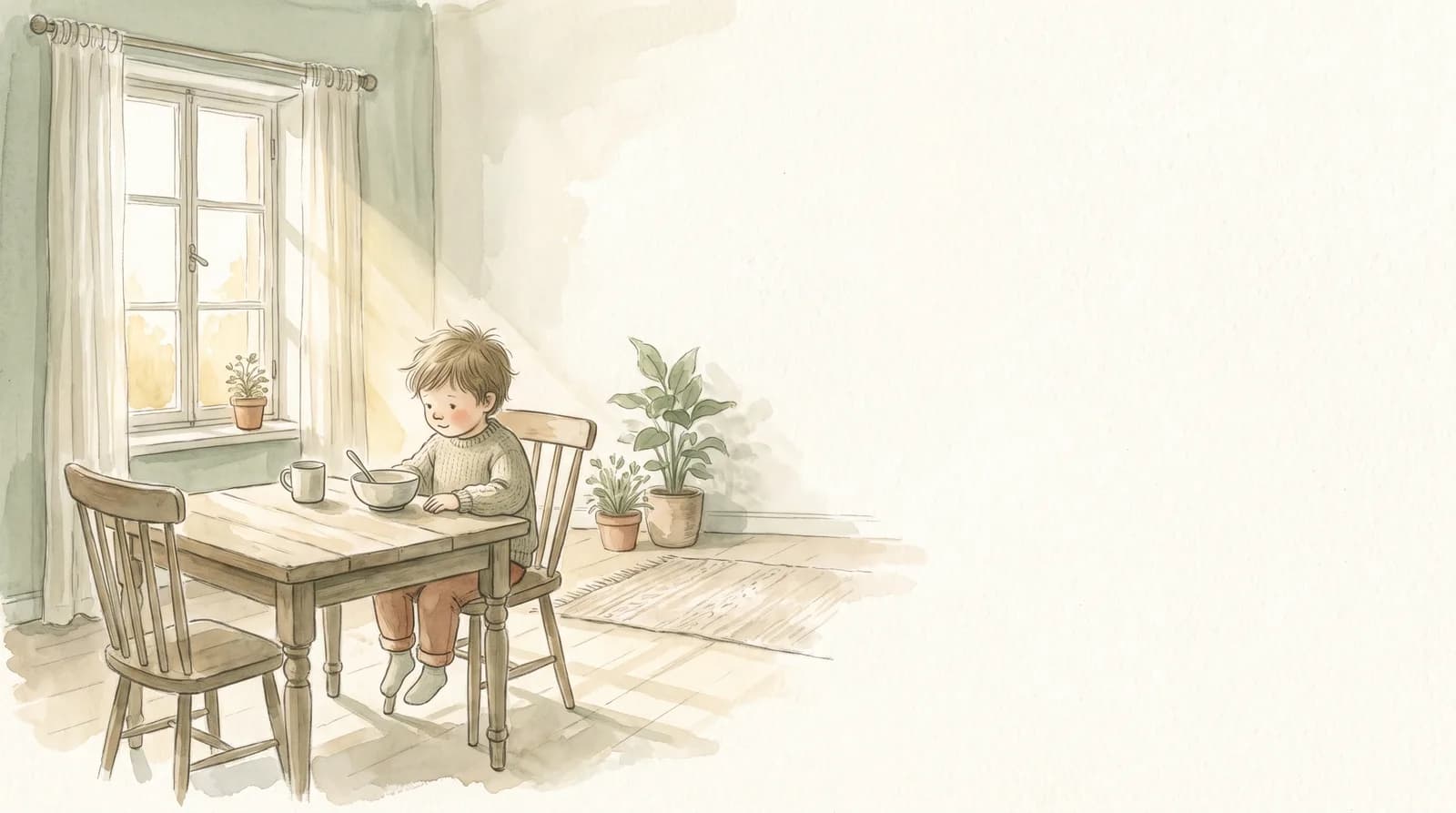
Bedtime resistance never really goes away — it just changes costume. The toddler who won't stay in bed becomes the five-year-old who's scared of the wardrobe, who becomes the eight-year-old with one more urgent question, who becomes the twelve-year-old arguing that everyone else stays up later. Underneath every costume are the same two truths: children don't want the day (or you) to end, and an overtired child looks wired, not sleepy. Here's what helps, age by age.
Toddlers and preschoolers (2–4): the curtain calls
This is peak stalling: one more story, one more wee, water, a different teddy, a sudden urgent need to tell you something. Each request is really the same question — "will you come back?"
- Make the routine the boss. The same calm sequence every night — bath, pyjamas, teeth, stories, cuddle, lights out — so the steps do the arguing for you. A picture chart works wonders at this age, because the child can see what's next instead of being told; our free bedtime routine chart is made for exactly this.
- Pre-empt the classics. Water by the bed, wee before stories, teddy chosen early. Decide story count in advance and hold it warmly.
- Make returns boring. If they pop up, walk them back gently with minimal chat — the fifteenth return gets the same quiet "it's sleep time" as the first. Excitement, even cross excitement, is a reward.
Starting school (4–7): the fears arrive
Big imaginations plus big new worlds mean this is when the dark, monsters, and wardrobe shadows show up — and when school worries start surfacing at lights-out, because a still, quiet bed is where the day's leftovers float up.
- Take fears seriously without feeding them. "You're safe, I'm just downstairs" plus a nightlight beats both mockery and a full monster-hunt (searching under the bed nightly can confirm there's something worth hunting).
- Give worries an earlier slot. A few minutes of chat during the wind-down — "anything you want to tell me about today?" — means less surfaces at 8.30pm.
- Keep the anchor cuddle. The few minutes of connection at the end is the bit they're stalling for. Build it in on purpose and the stalling eases.
Older primary (8–12): the negotiations
Now it's lawyer hours: "I'm literally not tired." "Everyone in my class goes to bed at ten." "Five more minutes of reading?" Some of it is genuine — sleep needs do shift — and some is the pull of a livelier evening world.
- Separate bedtime from sleep time. "In your room at 8.30, lights out at 9" gives them ownership of the gap — reading, drawing, audiobook. Children who feel some control fight the boundary less.
- Screens out of the bedroom. This is the age it starts mattering enormously, and it's a far easier rule to set now than at fourteen. Devices charge in the kitchen overnight — the whole family's, ideally.
- Negotiate in daylight. Weekend-versus-school-night bedtimes, the reading allowance — agree them calmly in the afternoon, then at night simply refer back: "we agreed 9pm." You're not the villain at 8.55; you're the record-keeper.
Early teens: the body clock actually moves
With adolescence, this stops being purely behavioural: teenage body clocks genuinely drift later, so a 9.30pm lights-out can feel to them like going to bed mid-afternoon. Fighting biology head-on breeds resentment; work with it instead. Protect the morning anchor (consistent wake time), keep phones out of the bedroom overnight, wind the evening down rather than policing the exact minute of sleep — and model it yourself, since a parent scrolling at midnight is a weak witness for the prosecution.
Two tools that earn their keep
Beyond the age-by-age moves, two small tools work at almost any age:
- The bedtime pass. For the champion staller (roughly 3–8): one card kept by the pillow, swappable for one legitimate pop-out — a drink, a question, a last hug. Used or not, it's spent by morning. It sounds like a gimmick; in practice it hands the child a scrap of control and quietly caps the curtain calls at one.
- The worry drop. For the child whose brain switches on at lights-out: a pad by the bed where tonight's worry gets written or drawn and "handed over" until morning. Most worries look smaller at breakfast — and the ones that don't, you now know about.
Neither fixes a wired child at 9pm on its own; they work as part of the same calm, boring, predictable rhythm, not instead of it.
The threads that run through every age
- Consistency beats intensity. A predictable, mostly-held routine outperforms occasional crackdowns at every age.
- Overtired looks like hyper. The child bouncing off the walls at 8.45 usually needs an earlier bedtime, not a later one — the "second wind" is stress chemistry, not proof they weren't tired.
- The hour before bed matters most. Dim, calm, screen-free — at every age, arousal is the enemy of sleep, not lack of strictness.
- Bedtime is when the day surfaces. The stalling child and the chatty tween are often doing the same thing: reaching for you at the day's end. A little connection, given on purpose, is the cheapest bedtime tool there is.
When to get help
If sleep is severely and persistently hard despite a steady routine — hours to fall asleep, frequent distressed waking, exhaustion affecting school and mood — talk to your GP or health visitor. Some children, including many autistic children and children with ADHD, find sleep genuinely harder and deserve tailored support rather than stricter routines. Asking is wisdom, not defeat.
Bring ParentUp home
Get gentle daily steps, your child's profile, and Coach Ella in your pocket — free to start.