Helping Children Handle Big Feelings
Anger, fear, jealousy, sadness — children feel intensely and need our help to cope. Here's how to raise an emotionally confident child.
Published 11 May 2026 · Updated 27 September 2026
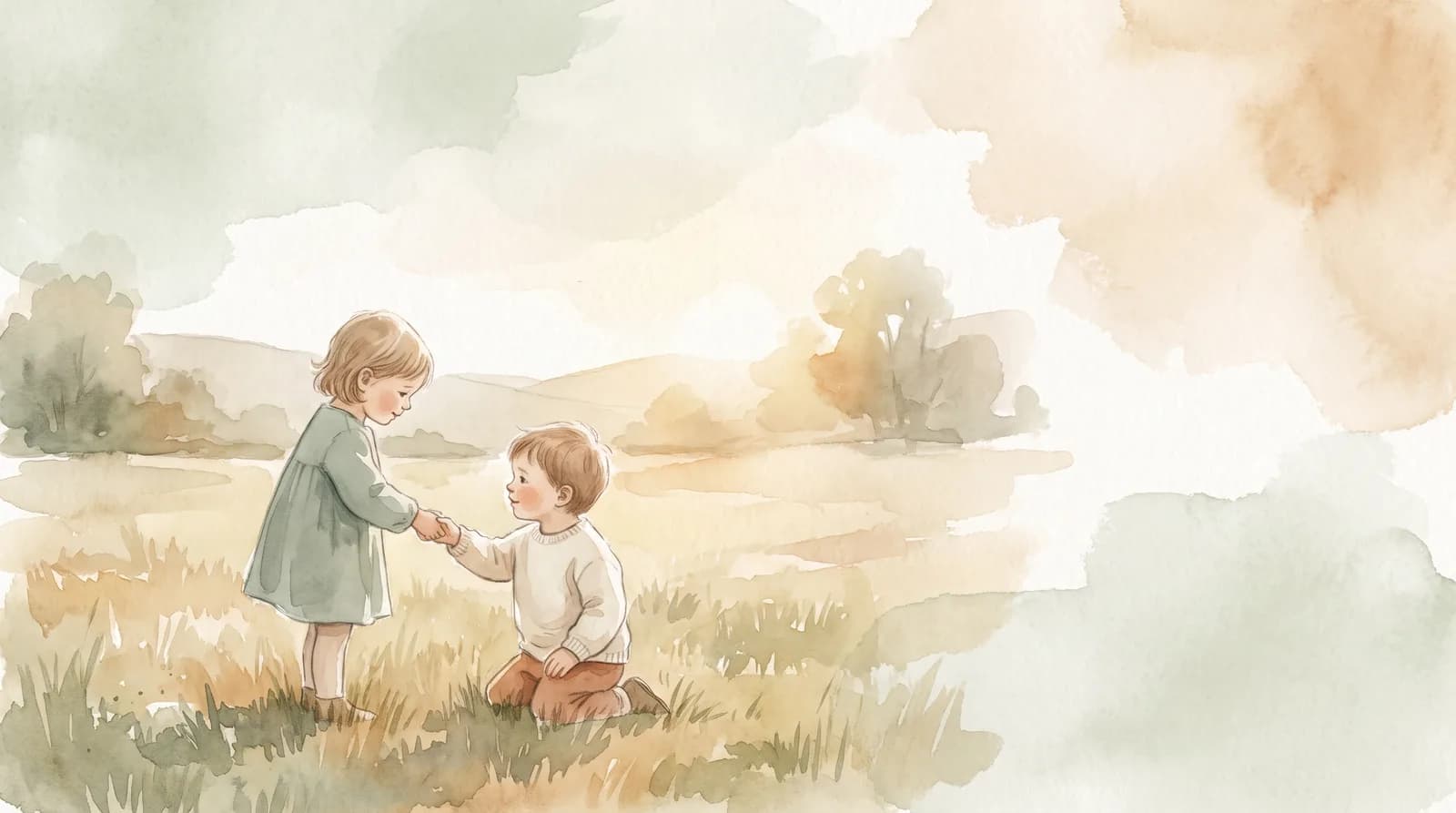
Big feelings are part of being a child. Anger that erupts over a broken biscuit, fear of the dark, jealousy of a sibling — these aren't problems to be stamped out, but emotions your child is learning to navigate. Your job isn't to stop the feelings, but to help your child feel them and come through.
Feelings aren't the problem
It's tempting to treat anger or tears as misbehaviour. But emotions themselves are never wrong — it's what we do with them that matters. A child told to "stop crying" or "don't be silly" learns to hide feelings, not handle them. A child whose feelings are accepted learns they're survivable.
Be the calm in their storm
Young brains can't regulate alone — they borrow our calm. When your child is flooded, your steady presence does the work their developing brain can't yet do. This is sometimes called co-regulation, and it's how self-regulation is slowly built.
A simple approach in the moment
- Connect first. Get close, soften your voice, and let them know you're there.
- Name it. "You're so disappointed we can't go." Words help tame the wave.
- Allow it. Let the feeling pass rather than rushing to fix or distract.
- Teach later. Once calm, talk about what happened and what might help next time.
Build the toolkit over time
When everyone is calm, you can practise simple strategies: slow "balloon" breaths, a cosy calm-down corner, naming feelings with a chart. Children can't reach for these tools mid-meltdown, but they build the habit when practised in peaceful moments.
Mind your own big feelings
Your child's storms will sometimes trigger your own. Modelling how you cope — "I'm feeling frustrated, so I'm going to take a deep breath" — is one of the most powerful lessons you can offer. You don't have to be calm always; you just have to keep coming back to calm.
When to reach for more support
Big feelings are normal, but if your child's distress is intense, constant, or getting in the way of everyday life — friendships, school, sleep — it's worth talking to your GP or a relevant professional. Seeking support early is a sign of strength, not failure.
Bring ParentUp home
Get gentle daily steps, your child's profile, and Coach Ella in your pocket — free to start.